Book of the Year 2025: Jacinda Ardern - A Different Kind of Power
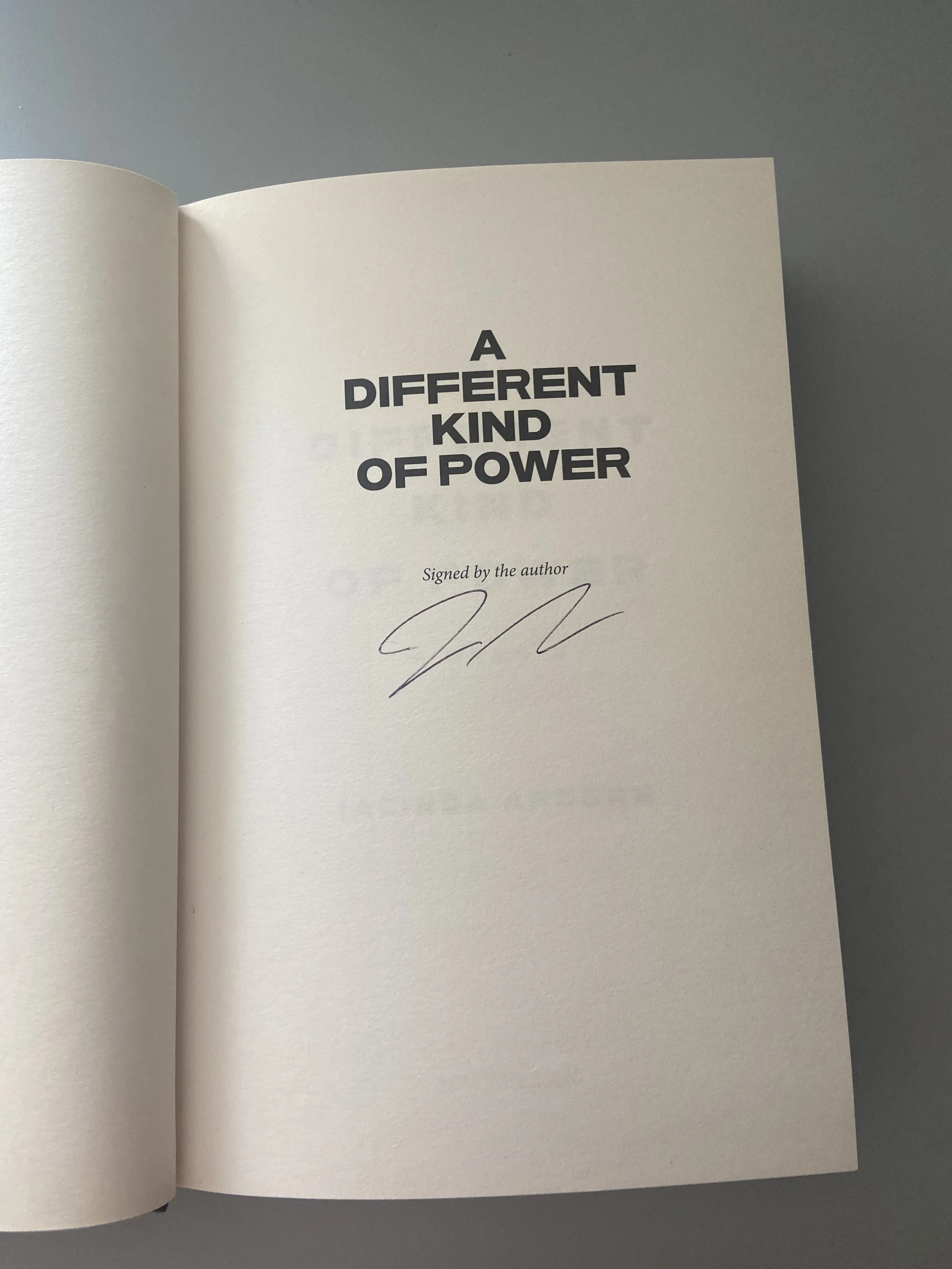
What if we could redefine leadership and put kindness first? It’s a question I’ve long asked myself and it explains my fascination with Jacinda Ardern, the former prime minister of New Zealand. When I heard she was releasing a memoir, I jumped at the chance to see her during the London leg of her A Different Kind of Power book tour.
The event, held at Central Hall Westminster back in June, saw Dame Jacinda Ardern reflect on her journey from small-town New Zealand to the world stage. She spoke candidly about leadership through the Christchurch terrorist attack, the COVID-19 pandemic and motherhood.
I loved her talk and read the book over the summer (mostly in the park!). There were so many highlights to choose from, so this is a heavily curated selection of moments from the book that resonated with me. I’ve also just watched the film Prime Minister, shot by her husband Clarke Gayford, which ends with a timely reminder: optimism is a form of moral courage.
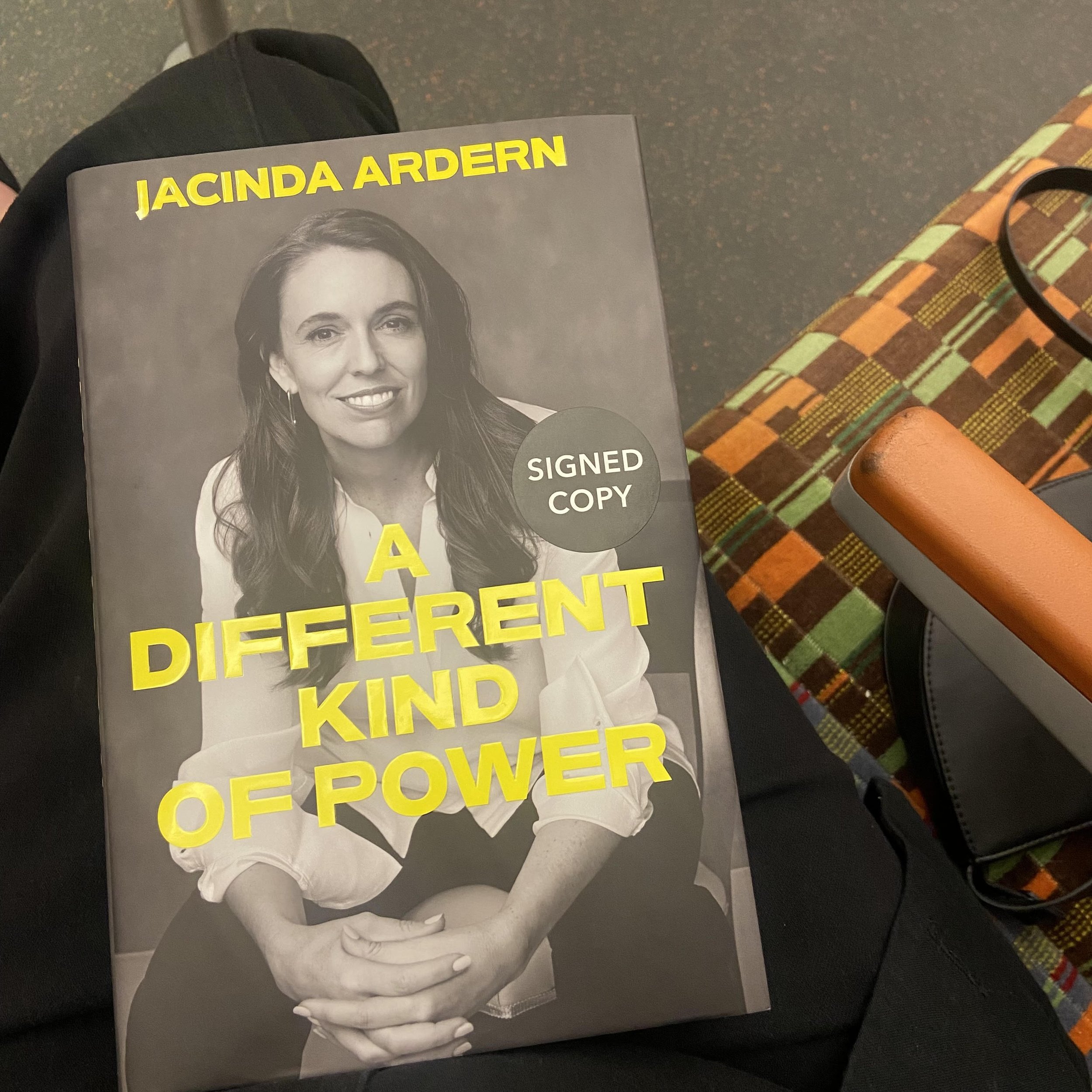
On my way home from Jacinda Ardern’s book talk with a fresh copy of A Different Kind of Power on the London Underground.
Without further ado, here are the leadership lessons in the book that stayed with me - and that I hope will stay with you, too:
Leadership that leads with humanity:
Early in the book, Jacinda Ardern reflects on her resistance to a style of politics built on attack and dominance:
“I would never be that kind of leader, and I didn't want to try. If the only way to put runs on the board in opposition was attacking and tearing people down, then maybe I was mediocre. I didn't want to choose between being a good politician and being what I considered a good person. So I settled into the criticism.”
Instead, she made a conscious decision that her leadership would feel different - open, listening and grounded in kindness:
"Kindness." That was the word. It is a child's word, in a way. Simple.”
She points out that kindness is often dismissed as sentimental, soft or naive in leadership, yet she’s observed it as a source of power and strength that nothing else has. She reminds us that humanity isn’t the opposite of authority; it must guide it. She was a human first and a leader second.
Jacinda Ardern’s approach shows that you can be thin-skinned, sensitive, not a Type A personality and full of self-doubt - and survive, if not thrive, as a leader. Her advice for anyone who doesn’t fit the mould:
"If you have impostor syndrome, or question yourself, channel that. It will help you. You will read more, seek out advice, and humble yourself to situations that require humility to be conquered. If you're anxious, and overthink everything, if you can imagine the worst-case scenario always, channel that too. It will mean you are ready when the most challenging days arrive. And if you are thin-skinned and sensitive, if criticism cuts you in two, that is not weakness; it's empathy. In fact, all of the traits that you believe are your flaws will come to be your strengths. The things you thought would cripple you will in fact make you stronger, make you better. They will give you a different kind of power, and make you a leader that this world, with all its turmoil, might just need.”
In 2019, Jacinda Ardern’s government introduced a Wellbeing Budget, moving beyond GDP as the sole measure of New Zealand’s progress. It included, among other things, a four-year $1.9 billion investment in mental health initiatives. When her team proposed a target of a 20% reduction in suicide rates by 2030, she insisted:
“The target is zero.”
The health minister agreed and that’s what they announced.
Leadership in the aftermath of horror:
Reflecting on Christchurch, one photograph became iconic - but Jacinda Ardern reframes it, centring those affected by the terrorist attack, instead:
“This photograph, taken by Kirk Hargreaves, would be called a "defining image" of my leadership, "an image of hope," "the face of empathy." But all these comments felt backward to me, like an inversion of reality.
Even now, when I see this picture, when I think of the moments before the camera recorded this image, I do not see myself. I see a good and gentle soul who'd been broken by horror and somehow still managed to lead with his heart. The image was a lesson in leadership, that's true. But it was Imam Lateef, not me, who gave it.”
When asked by a student how she was doing, she replied:
“I'm very sad.”
She admired that the student, despite being young, recognised that age and power don’t determine who needs comfort and who can provide it. Her response to the Christchurch attack was marked by restraint, empathy and a commitment to a world in which we take care of one another:
“I still believed that when faced with a choice between hatred and hope, you must choose hope every time.”
Leadership under uncertainty:
Jacinda Ardern describes COVID-19 as the ultimate leadership test, requiring decisive action without complete information. In her own words:
“LEADERSHIP IS A TEST for which you can only partially prepare. If you're lucky, the information you need is out there - somewhere, in some form. That wasn't the case with COVID.”
She continues that she’s read every letter from a child since becoming prime minister (hence declaring the Easter Bunny an essential worker!) and recalls attending a festival in the middle of a global pandemic. She reflects on knowing “the stories and circumstances of almost all” of the 25 people who died of the virus in New Zealand, as well as on the counterfactual (of saving 20,000 lives…):
“That word, "regret," contains so much certainty. Regret says you know precisely what you would have done differently, and the consequence of doing so. But we don't get to see the counterfactual, the outcome of the decisions we didn't make. The lives that might have been lost. One thing I am certain of is that I would want things to have been different. I would want a world where we saved lives and we brought everyone with us. Perhaps that is the difference between regret and remorse.”
Her experience reminds us that leadership isn’t about having all the answers; it’s about judgment, transparency and the courage to act with imperfect information.
Redefining leadership and motherhood:
One of the most important aspects of Jacinda Ardern’s leadership was her refusal to separate her humanity from her role - including becoming a mother while in office:
“After that, I wanted to go inside, to bundle Neve into her car seat and leave the hospital for home. But there were more questions. I rocked back and forth on my feet, hoping to keep everything where it belonged - organs, emotions, bodily fluids as I took a second question. This one came from a TV journalist.
"Prime Minister," he began. "What have you learned about the state of the public health system?"
It seemed I was a mum for all of four minutes. Now I was back to prime minister.”
Only the second world leader to have a baby in office (after Benazir Bhutto in Pakistan in 1990), Jacinda Ardern repeatedly challenged the idea that women could ‘do it all:’
“I worried that this photo could become a banner for "women doing it all" or some kind of proof point that women should never complain about how much they have on their plate, because, look, here's a woman running a country and being a mother. Sure, women can do it all; they are mothers, workers, caregivers, change makers, advocates, counsellors, cheerleaders, often doing these things with little support. But that doesn't mean they should.”
What stayed with me here was her insistence on support, shared responsibility and resisting the idea that exhaustion is a badge of honour.
Navigating leadership as a woman:
Throughout the book, Jacinda Ardern describes how often her authority was questioned based on assumptions about what a leader is supposed to look (or sound) like and prioritise.
During a press conference with Sanna Marin, then prime minister of Finland, a journalist asked whether they were meeting “just” because they were similar in age - and, implicitly, because they were women:
“I cut the journalist off, wondering aloud whether anyone had asked Barack Obama and John Key, the former prime minister of New Zealand," if they met because they were of similar age." As I said the words, I could feel my indignation rise. When we stood down from the podium, I felt as if I needed to apologize to Sanna.
"Don't worry," she said, laughing. "But I do wish I had told him that instead of talking trade, we braided each other's hair."
Sanna Marin’s response captured both the absurdity of the question, and how routinely women leaders are forced to deflect it.
Jacinda Ardern is equally clear about boundaries around motherhood. When questioned about her reproductive plans in a way no man would be, she pushed back:
“But you,” I said. “It is totally unacceptable in 2017 to say that women should have to answer that question in the workplace; it is unacceptable.”
Sometimes the kindest thing you can do is call someone or something out. Jacinda Ardern does just that, refusing to normalise the sexism she encountered at every turn. She challenged it because ultimately leadership is about deciding what behaviour we are willing - and not willing - to accept.
The unseen support behind leadership:
Another thread running through A Different Kind of Power is that leadership is rarely a solo endeavour. Jacinda Ardern is candid about the role of steady, behind-the-scenes support (perhaps first hinted at by their shared love of drum and bass!) in sustaining public leadership.
She recalls receiving an unexpected email from Clarke early on:
"Apparently, he isn't happy with the government. He says he wants to help with my campaign."
Over time, Clarke’s support comes not as grand gestures, but as consistent presence: handwritten notes, a cup of tea placed by her bed, an intuitive sense of when to listen, distract or make her laugh. It’s a reminder that resilience is often relational, built by the people who support and hold us steady when the work is most demanding: friends, family, colleagues or loved ones.
Knowing when to step away:
Perhaps the most striking lesson comes at the end of the book when Jacinda Ardern reflects on her decision to step down:
“I knew what Clarke was saying. I didn't want "them" to win either. But hadn't I defeated them already, by being there in the first place and then by persisting? Every day, people demanded I prove myself, and I had.
And I don't just mean through all the crises […]. I hadn't fundamentally changed who I was or what mattered to me.
I was finished proving myself. There was only one question I needed to answer now, and it wasn't one that would be posed by my critics. It was my own: Did I want to keep going?”
Her departure was grounded in clarity: an understanding that leadership also means knowing when perhaps your contribution has run its course. The line, “I wanted to be remembered for kindness” lingers with me. In a world that often rewards loudness or endurance at all costs, Jacinda Ardern offers the most important metric for success - doing it on your own terms:
“I had not been everyone's first image of a leader, including my own. I was a very ordinary person who found themselves in a set of extraordinary circumstances. But I had been a leader. And I had done it on my own terms.
[…]
Yes, I realized. I was happy. Happiness is a lot of things. And I had found plenty of it in this unexpected job I'd had. But the happiness I felt now came from knowing simply that I had done my best. Whatever the challenge, whatever came at me, I had done my best. And that was enough.”
If you haven’t already, I’d wholeheartedly recommend A Different Kind of Power - my book of the year! It’s funny, inspirational, full of common sense and a masterclass in leading - and in doing things differently.
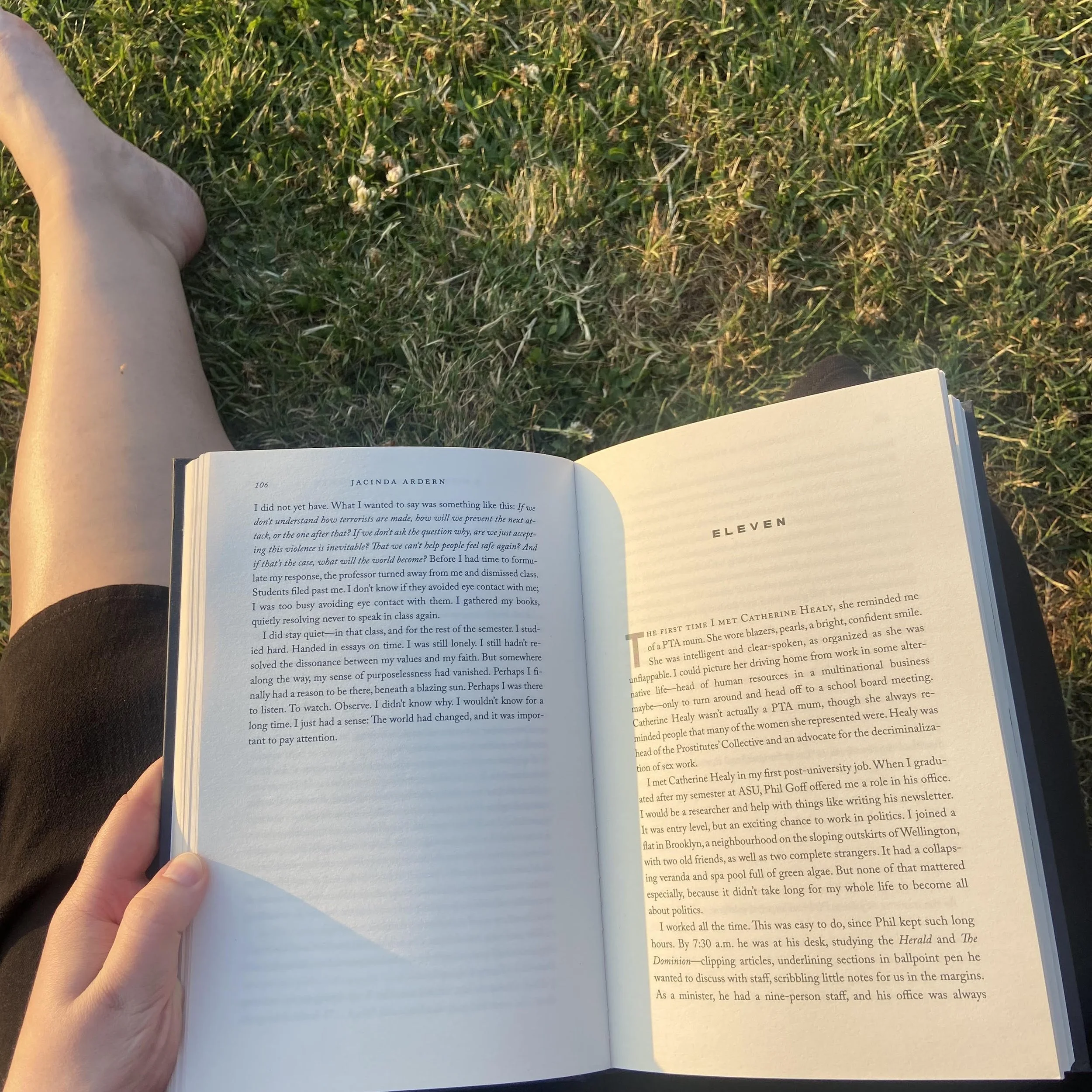
Golden hour in Clissold Park with Jacinda Ardern…