How Do You Listen Morally Today?
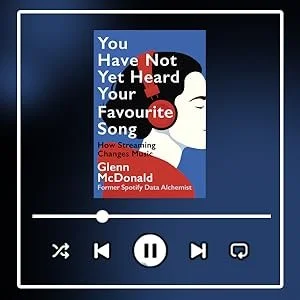
Last year, I finally read You Have Not Yet Heard Your Favourite Song by Glenn McDonald - former Spotify ‘data alchemist,’ known for projects like Every Noise at Once and The Sound of Everything.
In the book, the author explores how streaming has changed music and reassures us that there’s nothing inherently wrong with it. He points out that paying for a monthly subscription often means you’re spending more on recorded music than most people used to. You’re also part of what he calls “the current, ongoing, and incomplete but promising streaming-based music-industry recovery.”
The book ends with five suggestions for how to listen morally in the age of music streaming, so I thought I’d share them here:
1. Music first
Always prioritise music if you can - or in McDonald’s own words:
“If you have a choice between music and other ways of spending limited time, choose music as much as possible. If you have a choice between listening to music while you do a thing that allows you to listen to music at the same time, and a thing that doesn't allow it, choose the thing that does. If you have a choice between silence and music, choose music.”
2. Living artists first
The author encourages us to choose music by artists who are still alive and creating, especially those without massive back catalogues or estates behind them. Your listening supports their ability to keep making music:
“But the best goal of current listening, I think, is to support the art currently being made, and the artists making it. The listeners who are already dead can't do it, and the listeners in the future will be busy with their own songs. These songs are ours.”
While supporting living artists is straightforward, McDonald also warns of subtler listening traps.
3. Do not reward cynicism
According to him, there aren’t many wrong ways to listen to music, but there are ways that might reward laziness, grift and bad faith:
“Whether you do or don't, though, there aren't a lot of ways to listen badly. Old music supports estates and archivists. Listening to music that not a lot of people know yet helps democratize music and distribute its power, but listening to Ed Sheeran and Taylor Swift helps center music, culturally.”
Where he draws the line is low-effort, algorithm-chasing content designed to exploit attention:
“So my only negative rule is to try to avoid condoning, supporting or magnifying this. You can start by trying to learn to recognize your own capacity for laziness, because it's when you're lazy that you're most vulnerable to people trying to sell you pointless distraction relabeled as purpose.”
He gives specific examples, such as albums titled Dinner Jazz Classics by Smooth Jazz Masters with glossy party covers - contrasted with authentic classics like Cookin’ with the Miles Davis Quintet (1956). He also warns that new forms of grift are coming, notably AI-generated music by people who don’t care about musicians.
4. Welcome strangers, journey respectfully
Beyond personal listening habits, streaming affects how we engage with music from around the world. Here McDonald notes that while exploration is easier than ever, it shapes what you play next, your play counts, fan patterns and collective knowledge:
“One of the great gifts of bringing all the world's music together is that it allows you instant free passage into the hearts of other cultures. This is not completely harmless. […]
Listen curiously, and it will almost always be fine. Just don't be afraid to pause and ask questions, sometimes.”
5. Share your joy
Finally, and importantly, the author encourages generosity - not only in listening to music, but also in sharing it:
“Share your music. Send your friends songs they might like. Gush at strangers, post about discoveries, wear the band shirts you bought, find a couple songs in your vocal range so you aren't terrified of karaoke.”
Sharing music (or joy!), he argues, is reciprocal:
“Half of sharing joy is allowing yourself to receive it from other people.”
McDonald’s book leaves us hopeful; perhaps our next favourite song is waiting to teach us about connection, joy and love:
“Everything we need to know about love is in a song, somewhere. The next song, maybe.
Your new favorite song.”